AOD9604 5mg
₦200,000.00 – ₦1,500,000.00Price range: ₦200,000.00 through ₦1,500,000.00
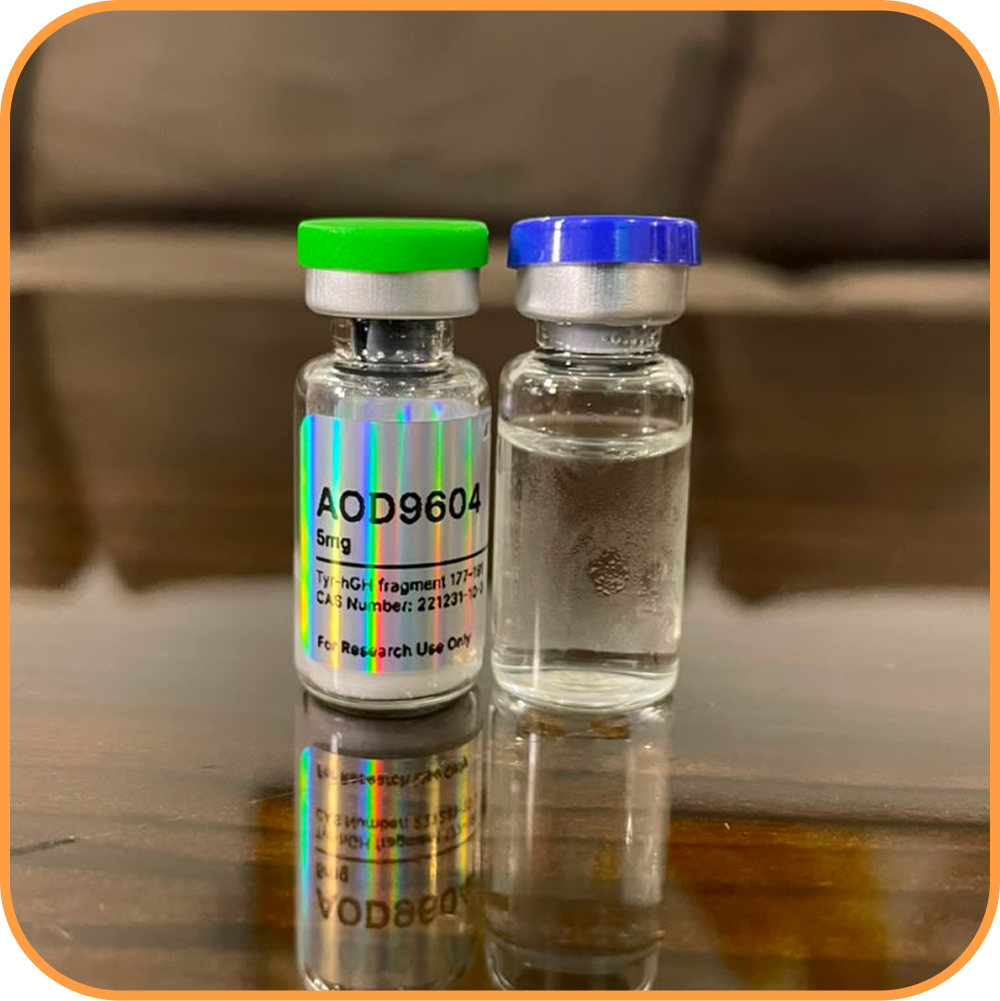
AOD9604 (Advanced Obesity Drug 9604) is a synthetic, modified 16-amino-acid fragment derived from the C-terminal region of human growth hormone (hGH), specifically encompassing amino acids 177–191 with an added tyrosine at the N-terminus for stability. It was intentionally engineered to isolate and preserve the fat-mobilizing (lipolytic) properties of growth hormone while stripping away its adverse effects on blood sugar, insulin resistance, and tissue growth.
Note: AOD9604 lacks formal FDA approval for medical weight loss indications, and protocols are guided by clinical trial history or exploratory research.
Research/Clinical Exploration Range: Typically administered between 250 mcg to 500 mcg per day.
Administration Timing: Most commonly recommended as a subcutaneous injection first thing in the morning in a fasted state (often with a window of 30 minutes before consuming food or beverages) to optimize fat oxidation pathways.
Alternative Routes: While subcutaneous injection is standard for bioavailability, oral troches or sublingual preparations have occasionally been utilized.
Clinical evaluations indicate that AOD9604 has a strong safety and tolerability profile compared to full-length growth hormone, with no observed impact on IGF-1 levels or glucose tolerance:
Injection Site Reactions: Mild, transient redness, itching, or minor discomfort at the subcutaneous site.
Systemic Sensitivities: Occasional, mild reports of headaches, nausea, or slight fatigue during initial adjustment periods.
Notably, it does not typically cause the water retention, joint stiffness, or hyperglycemia frequently associated with exogenous hGH.
AOD9604 interacts directly with lipid metabolism pathways through distinct mechanisms:
Stimulation of Lipolysis: It mimics the natural regulatory pathway by which the C-terminus of growth hormone signals fat cells to break down stored triglycerides into free fatty acids.
Inhibition of Lipogenesis: It helps suppress the body’s conversion of excess non-fatty foods and calories into stored body fat.
Receptor Selectivity: Unlike full hGH, AOD9604 does not stimulate the primary growth hormone receptors responsible for cell proliferation or insulin-like growth factor 1 (IGF-1) production, restricting its activity primarily to adipose (fat) tissue regulation.